




Новости

Heavy Duty Palletizing Systems for Bulk and Heavy Products
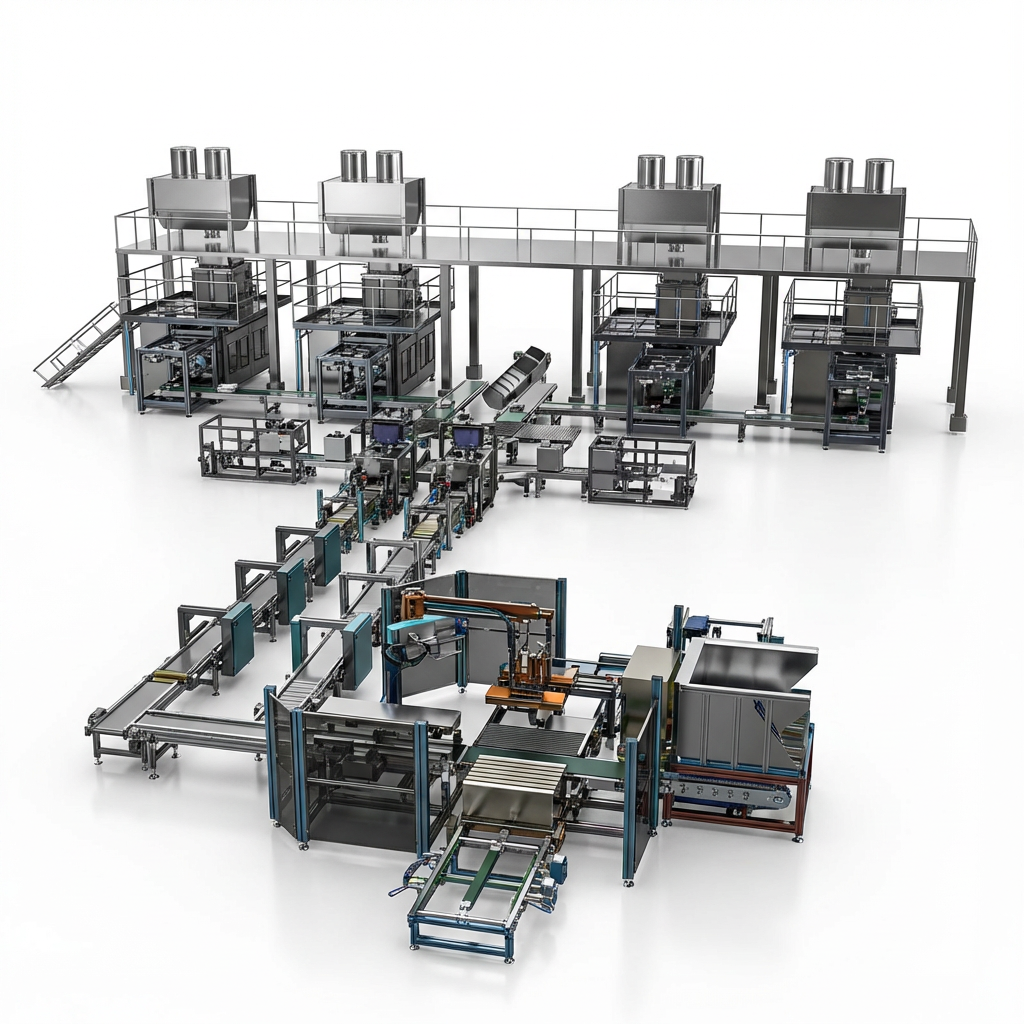
The global demand for handling heavy, bulk, and oversized products has grown exponentially across industries from construction to automotive manufacturing. Manual palletizing—once the go-to method for stacking goods onto pallets—has become unsustainable in many cases. Workers face risks of musculoskeletal injuries, reduced productivity due to fatigue, and inconsistent load quality. Standard palletizing systems, designed for lighter loads, often lack the robustness to handle products weighing hundreds of kilograms or more, leading to breakdowns, product damage, and inefficiencies. Enter heavy duty palletizing systems: specialized, automated solutions engineered to address these challenges by safely, efficiently, and consistently palletizing the world’s most demanding products. This guide explores everything you need to know about heavy duty palletizing systems for bulk and heavy products, including their definitions, types, components, advantages, specifications, applications, and best practices for implementation.
A heavy duty palletizing system for bulk and heavy products is an automated or semi-automated industrial solution purpose-built to stack, arrange, and secure extremely heavy, voluminous, or rigid items onto pallets. Unlike standard palletizing systems that typically handle loads up to 50 kilograms, heavy duty variants are engineered to support payloads ranging from 500 kilograms to over 3,000 kilograms per pallet load, and sometimes even more for specialized gantry systems. These systems differ from regular palletizers in their rugged construction, reinforced mechanical components, specialized end-of-arm tooling (EOAT), and advanced control systems that can manage the unique challenges of heavy load handling—such as maintaining stability during stacking, adapting to irregular product shapes, and withstanding repeated heavy-duty operations. For industries where goods like metal coils, chemical drums, concrete blocks, or heavy machinery parts are common, heavy duty palletizing systems are not just an upgrade but a necessity to meet operational and safety standards.
Heavy duty palletizing systems come in several specialized types, each tailored to different operational needs, load sizes, and production volumes:
Robotic heavy duty palletizers use articulated robotic arms equipped with high-payload capabilities, typically ranging from 500kg to 1,500kg. These systems are highly flexible, as their multi-axis design allows them to handle a wide variety of product shapes and sizes, from cylindrical drums to irregularly shaped automotive parts. They are ideal for operations that require frequent changeovers between different product types, as switching EOAT or adjusting program settings takes minimal time. Robotic palletizers can operate in tight spaces compared to larger systems, making them suitable for small to medium production lines.
Layer palletizing systems work by first forming an entire layer of products on a temporary platform before lowering the complete layer onto the pallet. This method ensures consistent layer alignment, which is critical for maintaining pallet stability when dealing with heavy loads. Layer systems are faster than many robotic options, with speeds ranging from 40 to 100 loads per hour, making them perfect for high-volume operations where products are uniform in shape and size—such as bulk bags of fertilizer or chemical drums. The robust frame of layer systems can support the weight of entire layers, often exceeding 2,000kg total per pallet.
Inline heavy duty palletizers are integrated directly into existing production lines, creating a continuous workflow where products move from the manufacturing stage to the palletizing stage without interruption. These systems are designed for high throughput, with speeds up to 120 loads per hour, and are built to withstand the continuous stress of heavy load handling. They are commonly used in automotive manufacturing for parts assembly lines and in construction material plants where bricks or blocks are produced in large quantities. Inline systems sync with upstream conveyors and downstream shrink-wrapping equipment, creating a fully automated end-to-end process.
Gantry heavy duty palletizing systems are the largest and most powerful option, designed to handle extremely heavy loads—often 1,500kg to over 3,000kg per pallet. They use a large, multi-axis gantry structure that spans across a wide area, allowing them to move heavy products from conveyors to pallets with high precision. Gantry systems are ideal for oversized products or operations that need to stack multiple heavy items on a single pallet, such as entire industrial machinery components or large construction beams. While they have a larger footprint than other types, their capacity to handle extreme weights makes them indispensable for industries dealing with the heaviest goods.
The effectiveness of a heavy duty palletizing system depends on specialized components engineered to handle heavy loads safely and efficiently:
EOAT is the critical interface between the palletizing system and the product, and for heavy duty applications, it must be specialized to handle the weight and shape of the goods. Common EOAT types for heavy duty systems include mechanical clamps for gripping rigid items like metal beams or drums, vacuum lifters for smooth, flat bulk products, and custom-fabricated grippers for irregularly shaped parts. For example, a system handling 200kg steel coils would use a heavy-duty clamp that applies even pressure to avoid damaging the coil while maintaining a secure grip during lifting and stacking. EOAT for heavy loads is built with high-strength materials like steel or aluminum alloy to withstand repeated stress.
The control system of a heavy duty palletizing system is powered by a Programmable Logic Controller (PLC), which manages all operations, from product detection to stacking patterns. A Human-Machine Interface (HMI) allows operators to input parameters like pallet size, load weight, and stacking patterns, making it easy to adjust for different products. Advanced control systems also include safety interlocks that prevent the system from operating if a load is over the maximum capacity—a feature that is non-negotiable for heavy load applications to avoid catastrophic failures. The PLC can also integrate with production line software to sync palletizing with upstream manufacturing, ensuring seamless workflow.
Safety is paramount in heavy duty palletizing, as even a small mistake with a 1,000kg load can cause serious injury or damage. Key safety features include emergency stop buttons placed at multiple points around the system, light curtains that stop operations if a person enters the work area, and physical guardrails that separate the operator from moving parts. Overload protection sensors monitor the weight of each load, automatically halting the system if it exceeds the system’s rated capacity. Some systems also include collision avoidance technology that prevents the robotic arm or gantry from hitting other components or products during operation. These features not only protect workers but also reduce downtime from accidents.
Heavy duty palletizing systems offer significant benefits over manual handling or standard palletizing solutions, making them a wise investment for industries dealing with heavy products:
Manual palletizing of heavy products like 200kg chemical drums or 500kg concrete blocks puts workers at high risk of musculoskeletal disorders, one of the leading causes of workplace injuries in manufacturing and logistics. Heavy duty palletizing systems eliminate this risk by handling all lifting and stacking tasks, so workers are no longer exposed to the physical strain of moving heavy loads. Industry safety studies show that facilities using these systems report a 70-90% reduction in workplace injuries related to manual material handling.
Heavy duty palletizing systems operate at a consistent speed, regardless of fatigue, unlike human workers who slow down after long shifts. A robotic heavy duty palletizer can handle 20-60 loads per hour, while a layer system can reach 100 loads per hour—far faster than manual palletizing, which typically averages 5-15 loads per hour. This higher throughput means facilities can meet higher production demands, reduce order fulfillment times, and increase overall operational efficiency. For example, a construction material plant using a layer palletizing system can palletize 100 blocks per hour, compared to 10 per hour manually, cutting their palletizing time by 90%.
Consistent pallet stacking is critical for stable loads during transport, as unstable stacks can lead to product damage, road accidents, or wasted warehouse space. Heavy duty palletizing systems follow pre-programmed stacking patterns, ensuring each layer is aligned perfectly, which reduces load instability by up to 80%. Additionally, these systems minimize product damage: manual handling often causes scratches, dents, or broken parts due to uneven gripping, but automated systems apply controlled force to each product, reducing damage rates by up to 50%.
While the initial investment in a heavy duty palletizing system is higher than manual labor or standard equipment, long-term savings are significant. Labor costs: replacing 2-3 manual palletizing workers with one operator for the system reduces annual labor expenses by tens of thousands of dollars. Product waste: reduced damage means less money spent on replacing defective goods. Downtime: automated systems run continuously with minimal breaks, so production lines stay operational longer, increasing overall output. Over 5 years, the return on investment (ROI) for a heavy duty palletizing system typically ranges from 18-36 months, making it a financially sound decision.
Modern heavy duty palletizing systems are designed to adapt to changing production needs. For robotic systems, swapping EOAT takes minutes, allowing facilities to switch between handling drums, bags, and irregular parts without major adjustments. Inline and layer systems can be programmed to adjust stacking patterns for different pallet sizes, so they can handle multiple product lines with minimal setup time. This flexibility is crucial for industries that regularly update their product lines or handle a variety of heavy goods.
Heavy duty palletizing systems create stable, uniform stacks that allow more products to fit on a single pallet. This increased load density means fewer pallets are needed to store or transport the same amount of goods, reducing warehouse space requirements and transportation costs. For example, a pallet of bricks stacked manually might have a lower density than one stacked by an automated system, so a warehouse can store 20% more bricks in the same space with automated palletizing.
The following table outlines general specifications for common heavy duty palletizing system types, to help you understand their capabilities and suitability for different applications:
| System Type | Maximum Payload Capacity (kg) | Palletizing Speed (loads/hour) | Footprint (Square Feet) | Power Requirements (kW) | Primary Applications |
|---|---|---|---|---|---|
| Robotic Heavy Duty Palletizer | 500 – 1,500 | 20 – 60 | 15 – 30 | 3 – 7 | Automotive parts, heavy machinery components |
| Layer Palletizing System | 1,000 – 2,000 | 40 – 100 | 25 – 40 | 5 – 10 | Bulk bags, chemical drums, grain containers |
| Inline Heavy Duty Palletizer | 750 – 1,800 | 50 – 120 | 20 – 35 | 4 – 9 | High-volume production lines, construction materials |
| Gantry Palletizing System | 1,500 – 3,000+ | 30 – 80 | 30 – 50 | 8 – 15 | Oversized loads, entire pallet assemblies, large industrial goods |
Heavy duty palletizing systems are essential for industries that handle heavy or bulk products. Key sectors include:
To maximize the value of a heavy duty palletizing system, follow these critical best practices:
Before selecting a system, calculate the maximum weight per product, pallet size, and stacking requirements. Choose a system with a 20-30% safety margin over your heaviest load to avoid overload risks. For example, if your heaviest product is 800kg, select a system with a 1,000kg payload capacity.
Ensure the palletizing system integrates seamlessly with your conveyors, production lines, and software. Poor integration can create bottlenecks and reduce efficiency, so work with providers to sync all components.
Create a maintenance schedule for motors, EOAT, safety sensors, and conveyors. Predictive maintenance features (common in modern systems) can alert you to potential issues before they cause downtime, which is critical for heavy duty operations.
Train operators on HMI use, safety protocols, and error resolution. Ensure they understand load limits and how to adjust settings for different products to avoid accidents or system damage.
Choose a system that can grow with your business. Robotic systems are more scalable than fixed systems, as they can be reprogrammed to handle new products without major modifications.
The heavy duty palletizing industry is evolving with technology advancements:
Heavy duty palletizing systems for bulk and heavy products are essential tools for modern industries that handle demanding goods. They offer unmatched safety, efficiency, precision, and cost savings compared to manual handling or standard palletizing solutions. From robotic systems for flexible operations to gantry systems for extreme loads, there is a type of heavy duty palletizing system to fit every industry’s needs. By choosing the right system, integrating it properly, and following best practices for maintenance and training, facilities can maximize their operational efficiency, reduce costs, and improve workplace safety. As technology advances with AI, IoT, and collaborative robotics, the future of heavy duty palletizing is even more promising, offering greater flexibility, sustainability, and performance for industries worldwide.
предыдущий:
Advantages of Closed System Powder Heavy Duty Packaging MachinesСледующая статья:
Customizable FFS Packaging Solutions for Various Industries Промышленный парк группы B Aolan, район Чжандянь, город Цзыбо, провинция С-Шакэ, филиалы: Хэфэй / Синьцзян / Шанхай, перерабатывающие базы: Цзыбо / Хэфэй
 +86 15156080266
 emocnn@163.com
© Авторские права: 2026 Шаньдунская компания Chengyi Intelligent Equipment Co., Ltd. Все права защищены.

Поддерживается сеть IPv6
Этот веб-сайт использует файлы cookie, чтобы обеспечить вам максимально эффективное использование нашего веб-сайта.


Комментарий
(0)