





industrial shell and tube condenser for heat exchange system
Industrial shell and tube condensers are foundational heat exchange components designed to efficiently remove latent and sensible heat from vapor streams, making them indispensable across a wide range of industrial processes. Their robust, scalable design enables them to handle high volumes, varying pressure conditions, and diverse fluid types—qualities that set them apart from smaller or specialized heat transfer units.Structurally, the condenser consists of a large cylindrical outer shell (typically constructed from corrosion-resistant carbon steel, stainless steel, or alloy based on operational needs) enclosing a tightly bundled array of parallel tubes. Each end of the tube bundle is secured to a rigid tube sheet, which seals the ends of the shell to create two separate fluid chambers: the shell side (space between the outer shell and tubes) and the tube side (the interior of the tubes). This dual-chamber design ensures process fluids do not mix, a critical safety and operational requirement in many industrial applications.The working principle relies on controlled fluid flow to maximize heat transfer efficiency. Generally, the hot vapor stream (e.g., exhaust steam from power turbines, hydrocarbon vapors from distillation, or refrigerants from compressors) enters the shell side. As it flows across the tube bundle—guided by evenly spaced baffles inside the shell that direct flow to prevent turbulence loss and short-circuiting—the vapor condenses into a liquid, releasing large amounts of latent heat. Simultaneously, a cooler working fluid (most often freshwater, treated water, or a thermally stable refrigerant) circulates through the tubes, absorbing the transferred heat and exiting at a higher temperature. Baffle design, tube pitch (triangular for higher efficiency, square for easier cleaning), and tube material selection are optimized to balance heat transfer performance with pressure drop and maintenance accessibility.Key advantages of shell and tube condensers include their ability to operate under extreme pressures (up to several hundred bar) and temperatures, compatibility with both corrosive and high-viscosity fluids, and modularity—units can be customized in size, tube count, and layout to match specific process requirements. They are also relatively easy to maintain: fouling (mineral deposits or debris on tube walls, which reduce efficiency over time) can be addressed via mechanical brushing, chemical cleaning, or partial tube replacement, avoiding full system shutdowns.Common applications span thermal power generation (condensing turbine exhaust to complete the Rankine cycle), petrochemical refining (recovering solvents or condensing process vapors), large-scale refrigeration for food and pharmaceutical industries, and industrial HVAC systems. Beyond performance, these condensers contribute to energy efficiency by recycling waste heat, lowering operational costs, and supporting sustainable industrial practices. (Word count: 502)
продукт
классификация:
-
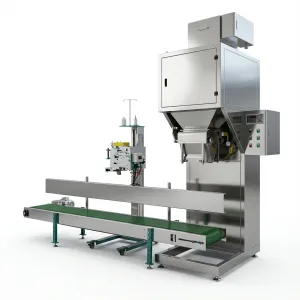
Industrial Shell and Tube Condenser for Heat Exchange System
Их классификация: Полуавтоматическая упаковочная машина для тяжелых условий эксплуатациимнения: 13номер:Время выпуска: 2026-10-12 09:05:02Industrial shell and tube condenser, core heat transfer unit for vapor condensation & steady industrial heat exchange.
новости
классификация:
Нет результатов поиска!
случай
классификация:
Нет результатов поиска!
видео
классификация:
Нет результатов поиска!
скачать
классификация:
Нет результатов поиска!
вербовка
классификация:
Нет результатов поиска!
Рекомендуемые продукты
Нет результатов поиска!


